
Hello bank!
Hello bank! is a mobile-only bank that caters to a younger generation. Services include banking, mortgages, insurances, and in the past crowdfunding. Hello bank! is a subsidiary of BNP Paribas Fortis.
Challenges
The acceptance rate of the cookie policy banner was dramatically low (29%) and impacting the bank’s acquisitions costs for new prospects. BNPPF’s 63% consent acceptance rate was set as a benchmark to overcome.
Outcomes
After a thorough research, 3 cookie consent banner proposals were provided to A/B test and see if one of them would surpass BNPPF’s 63% benchmark.
Result
The A/B test results indicated an uplift of 118%; with a 64% acceptance rate for the T1 variation banner proposal compared to the control (T0); in the process dramatically reducing the acquisitions programs cost.
Services
Research
User Experience Design
Team
Philippe Dewamme - Team Lead/Manager Hello bank!
Kristof Van Holder - P.O. Hello bank!
Mark Graham Dunn - Sr UX / UI Designer
Problem Statement
-

cookie banner footer implemenation - ©Hellobank!
-
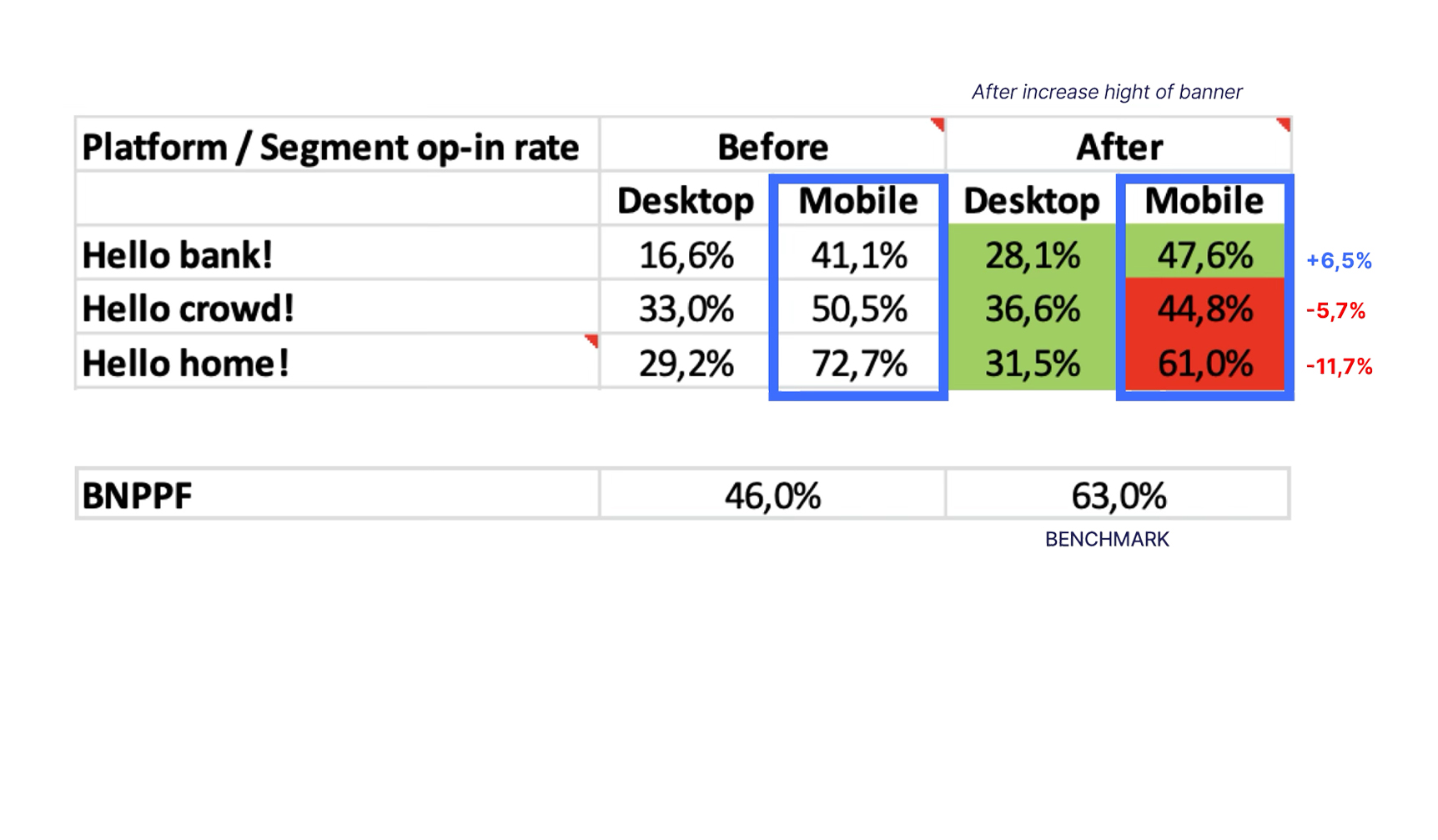
acceptance rate of cookie banner - ©Hellobank!
UNDERSTANDING
The acceptance rate of the cookie policy was dramatically low. 2 out of 3 visitors to the Hello bank! websites did not accept the consent banner, making it harder to “track” their actions on the site.
This impacted the personalisation & direct targeting a visitor’s preference while increasing the bank’s acquisitions costs of new prospects.
There were minor increase* in consent acceptance for the Hello bank websites, they were neither significant nor satisfactory.
* After bumping up the hight of the cookie banner
MISSION
BNP had a 63% consent acceptance rate* after the modification, this benchmark was set as a challenge to surpass.
* BNP had a higher acceptance rate because users had to explicitly give their consent to access their personal Easy Banking Web.
Discover & Define
INSIGHTS
Before starting any designs I shifted through research papers to validate my assumptions related to banner blindness, and banner type and shape effect on click-through-rate and conversion.

- Study on banner advertisement type and shape effect on click-through-rate and conversion by Eetu Kuneinen
- Using eye tracking to understand banner blindness and improve website design by Chad Lapa
STRATEGY
To substantiate my hypothesis I researched occurring patterns that I would use to guide and focus on in my design proposals.

Develop
PROPOSED SOLUTIONS
Using the researched patterns (Format, Placement, Visual Saliency) as a guide, 3 banner interventions were provided and tested through a visual saliency tool* to attest their efficiency.
* www.gweezy.com
-
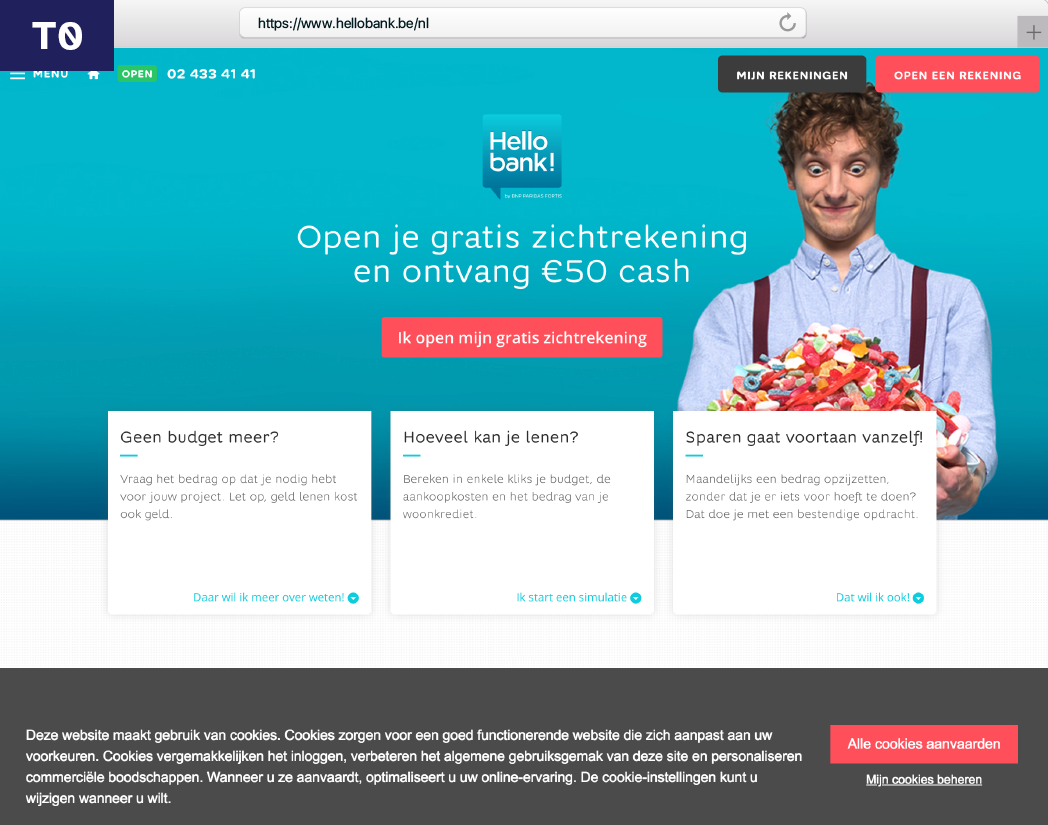
Banner - Control T0
-

Banner - T1
-
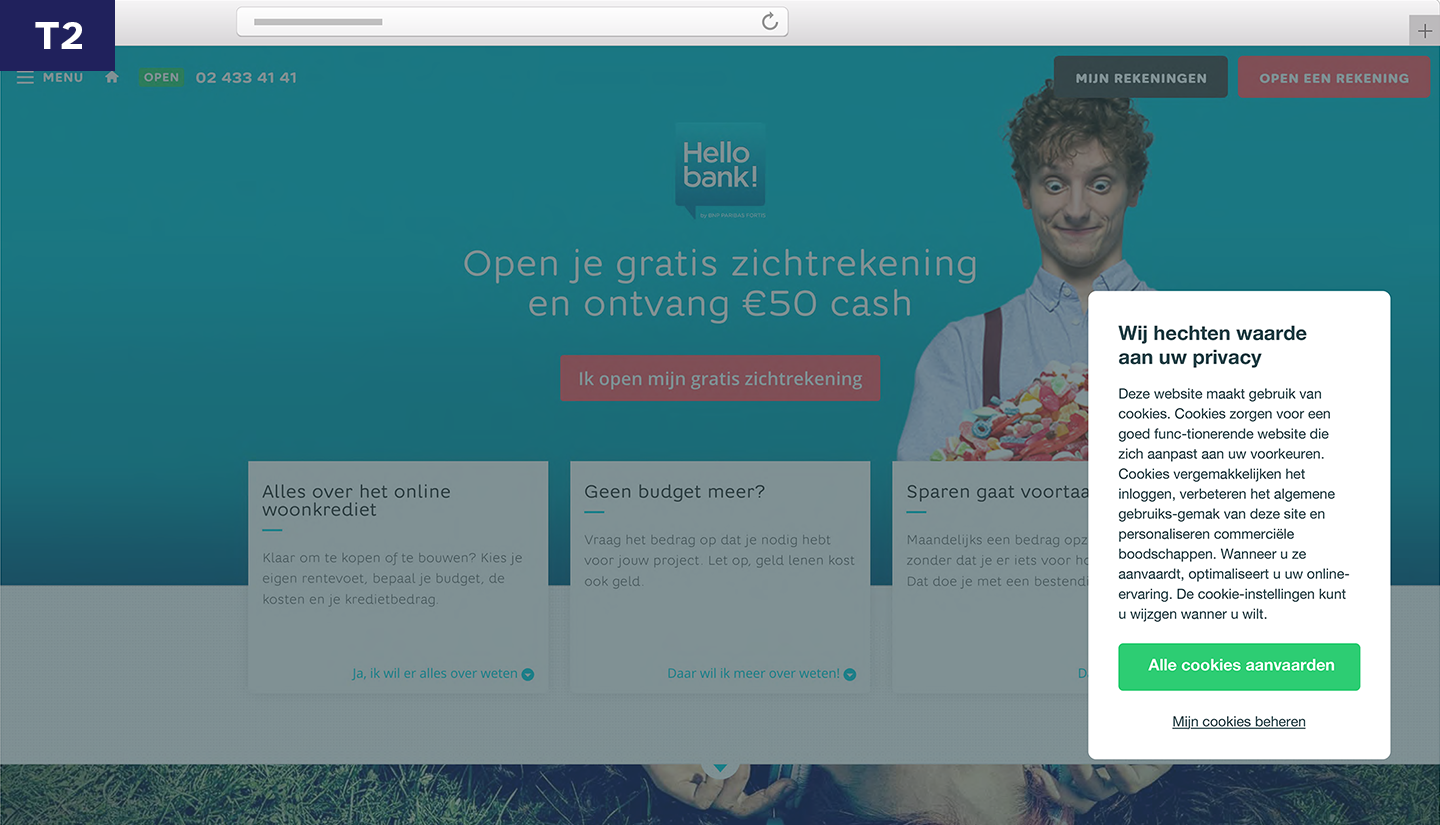
Banner - T2
-
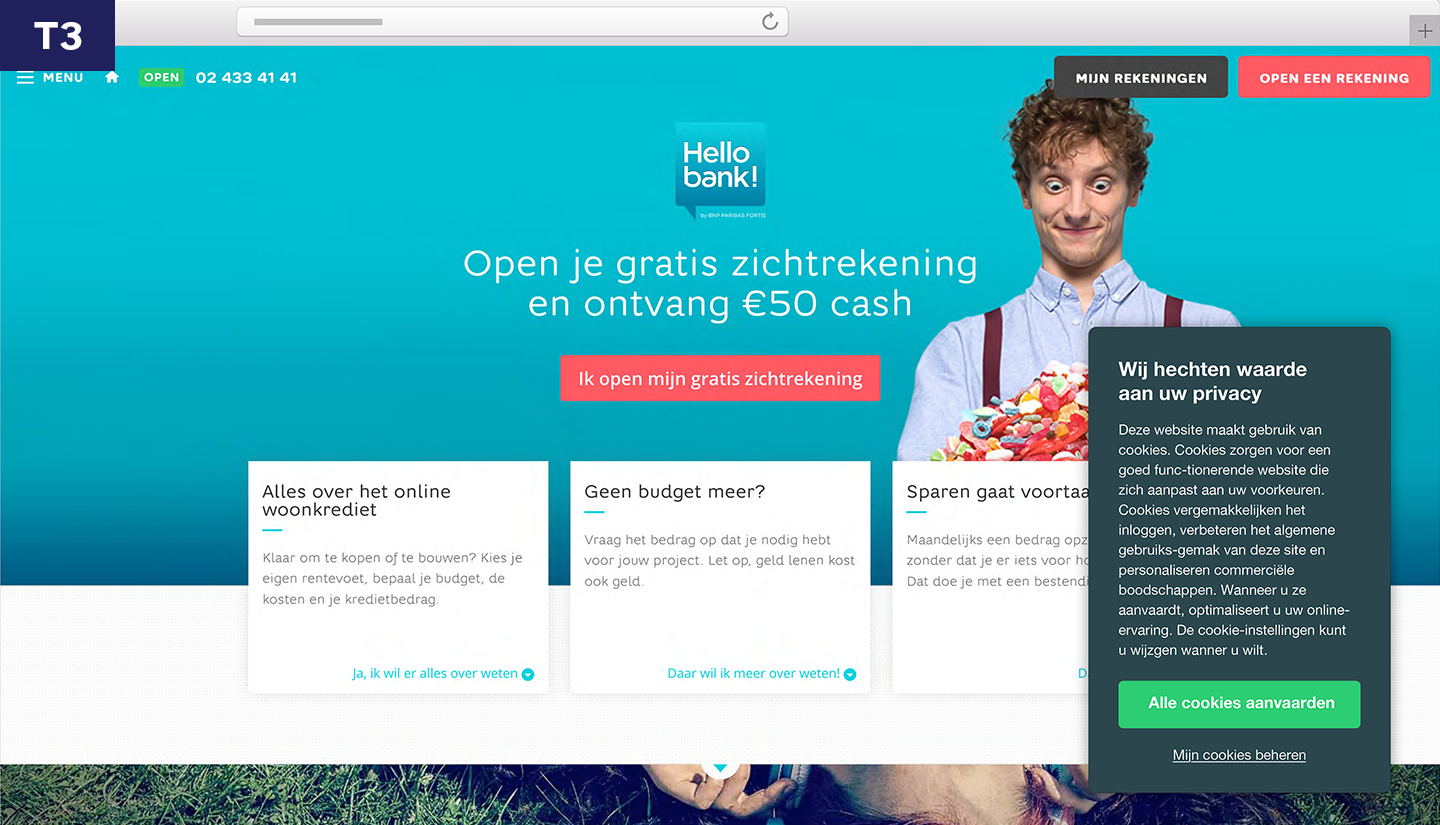
Banner - T3
Control (T0)

Variant (T1)

Variant (T2)

Variant (T3)

Deliver
RESULTS
The first results were not very promising, T3 resulted in a meager average uplift of 13,45%.
It drastically changed when T1 was put up to the test.
The T1 banner resulted in an uplift of 118%, with 64% acceptance rate!
Thereby surpassing the BNPPF’s 63% benchmark.
